
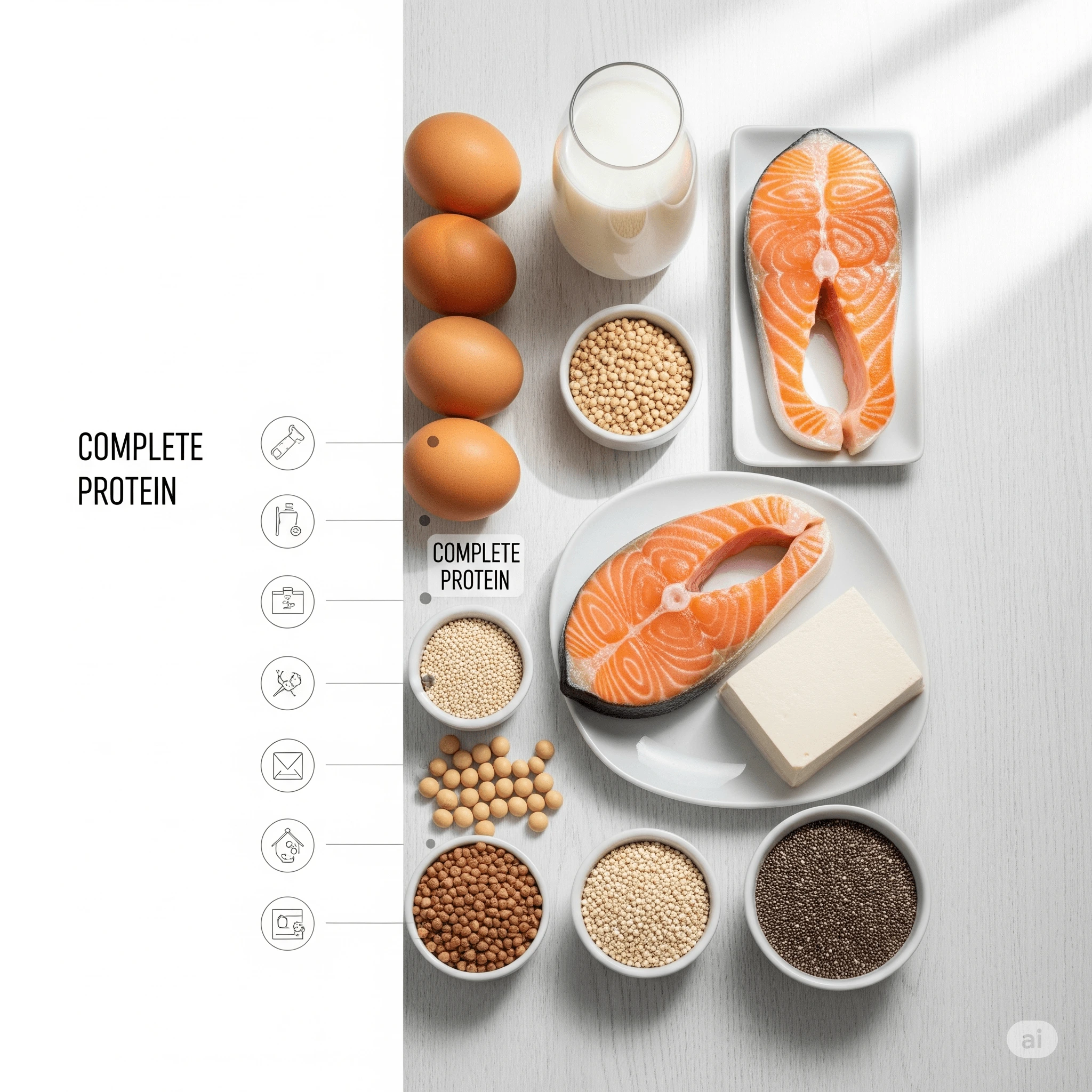
A complete protein is a protein source that contains all nine essential amino acids your body needs but cannot produce on its own. These amino acids must come from food, and getting them in the right balance is crucial for muscle repair, metabolism, hormone production, and overall health.
Whether you’re eating animal-based, vegetarian, or vegan, you can meet your complete protein needs with the right food combinations and choices.
👉 Start by calculating your daily needs with our Protein Intake Calculator.
🔹 Complete Protein Definition
A complete protein contains all 9 essential amino acids in adequate amounts. These include:
- Histidine
- Isoleucine
- Leucine
- Lysine
- Methionine
- Phenylalanine
- Threonine
- Tryptophan
- Valine
According to Medical News Today, most animal products are complete proteins, while many plant-based sources are incomplete, but with smart combinations, vegetarians and vegans can still meet their amino acid needs fully.
🔹 Is Milk a Complete Protein Food?
Yes — milk is a complete protein. Most dairy products, eggs, fish, poultry, and meat are considered complete proteins because they contain the full amino acid profile your body requires.
A cup of milk provides around 8 grams of high-quality, complete protein along with calcium and vitamin B12. It’s an excellent source for vegetarians who include dairy.
🔹 List of Complete Proteins
Here are some top foods that naturally contain all essential amino acids:
| Food | Protein (per 100g) | Type |
|---|---|---|
| Eggs | 13g | Animal-based |
| Chicken breast | 31g | Animal-based |
| Quinoa | 14g | Plant-based |
| Soybeans | 36g | Plant-based |
| Greek yogurt | 10g | Animal-based |
| Tofu | 8g | Plant-based |
| Buckwheat | 13g | Plant-based |
| Fish (salmon, tuna) | 22–25g | Animal-based |
Explore more high-protein foods using our Protein Calculator.
🔹 Plants That Are Complete Proteins
Some plants naturally provide a full amino acid profile. These include:
- Quinoa
- Soybeans (and soy products like tofu and tempeh)
- Amaranth
- Buckwheat
- Hemp seeds
- Chia seeds
These are great options for vegans and vegetarians aiming to meet protein needs without relying on animal sources.
🔹 Vegetarian and Vegan Complete Protein Tips
If you’re following a vegetarian or vegan diet, you can still hit your complete protein goals by either:
- Eating complete plant sources (like quinoa or soy)
- Combining complementary proteins throughout the day
Examples of complementary combinations:
- Rice + beans
- Whole wheat bread + peanut butter
- Lentils + whole grains
This approach, known as “protein combining,” helps your body assemble complete amino acid profiles over the course of the day.
📌 Check out this external guide on Vegan Complete Proteins for even more combinations.
🔹 Final Thoughts: Why Complete Proteins Matter
Consuming complete proteins helps:
- Build and maintain lean muscle
- Strengthen the immune system
- Support enzymes and hormones
- Improve energy levels and mood
Even on a plant-based diet, you can meet your needs — it just requires mindful planning and the right combinations.
👉 Need a personalized plan? Use our free Protein Calculator to find out how much complete protein you should aim for each day.