
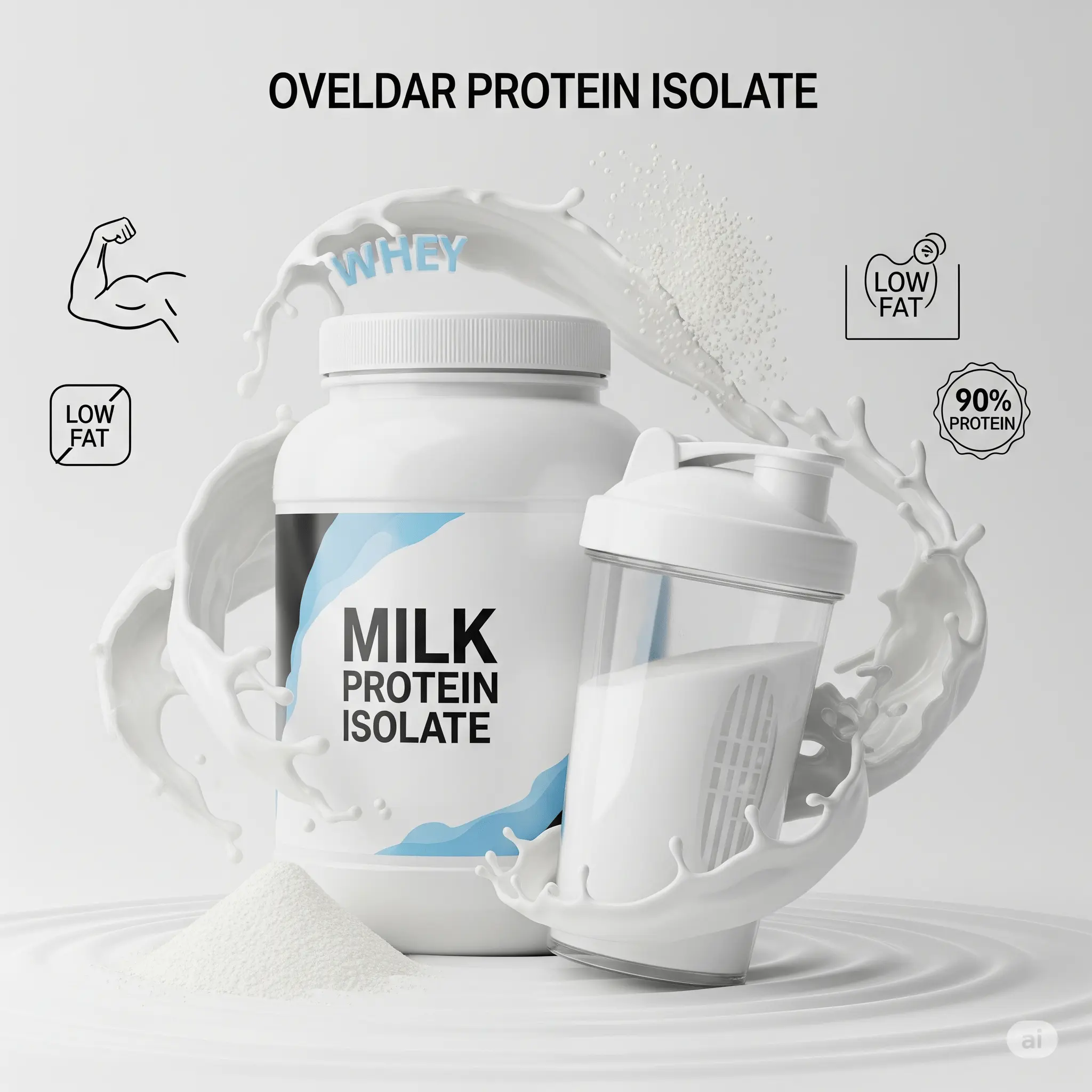
Milk protein isolate is a powerful, versatile source of protein that offers a high concentration of both casein and whey, making it ideal for anyone looking to boost muscle recovery, stay full longer, or improve overall protein intake. If you’ve seen this ingredient in protein powders, bars, or drinks and wondered how it differs from others, this guide breaks it all down.
👉 Use our Protein Intake Calculator to see how much protein you need daily and whether milk protein isolate is a good fit for your goals.
🔍 What Is Milk Protein Isolate?
Milk protein isolate is made by filtering skim milk to remove most of its fat and carbs, leaving behind a protein-rich powder that contains roughly 90% or more protein content by weight. Unlike whey protein isolate, which is fast-digesting, milk protein isolate contains both whey and casein, providing a slow and steady release of amino acids.
✅ Key benefits:
- High-quality complete protein
- Contains both fast and slow-digesting proteins
- Low in lactose (typically well-tolerated)
- Great for meal replacement, recovery, or before bed
Source: NIH on Protein Supplements
🥛 Milk Protein Concentrate vs. Whey: What’s the Difference?
Many people confuse milk protein concentrate, milk protein isolate, and whey protein, but they differ in key ways:
| Type | Protein Content | Speed of Digestion | Contains | Best Use |
|---|---|---|---|---|
| Whey Protein | ~80–90% | Fast | Only whey | Post-workout |
| Milk Protein Concentrate | ~40–85% | Mixed | Casein + Whey | General use |
| Milk Protein Isolate | 90%+ | Mixed (slow dominant) | Casein + Whey | Meal replacement, recovery |
Milk protein concentrate has more lactose and fat than isolate, while isolate is more purified and better for those with sensitive digestion.
🧠 Learn more about the differences in this Healthline guide on protein types.
💪 Who Should Use Milk Protein Isolate?
- Athletes and bodybuilders: For sustained amino acid release
- People on a weight loss plan: Helps with satiety
- Busy professionals: Great in smoothies or meal replacement shakes
- Anyone needing a clean protein boost: Low-carb, low-fat option
⚖️ How Much Should You Take?
Protein needs vary by age, weight, and goals. A general guideline:
- Sedentary adults: 0.8g/kg of body weight
- Active adults: 1.2–2.0g/kg
👉 Use our Protein Intake Calculator to find your ideal daily amount.
🛒 Where to Find Milk Protein Isolate
You’ll commonly find milk protein isolate in:
- Protein powders (especially casein blends)
- Meal replacement shakes
- Protein bars
- High-protein yogurts or beverages
Check ingredient labels — it may be listed as “milk protein isolate,” “micellar casein,” or as part of a protein blend.
📝 Final Thoughts
Milk protein isolate is an excellent choice for sustained-release, high-quality protein. It offers both whey and casein in one ingredient, making it suitable for a variety of health and fitness goals. Whether you’re trying to build muscle, lose weight, or simply meet your protein needs more efficiently, it’s worth adding to your nutrition plan.
📌 And remember — start with a personalized plan:
👉 Calculate your protein needs here