
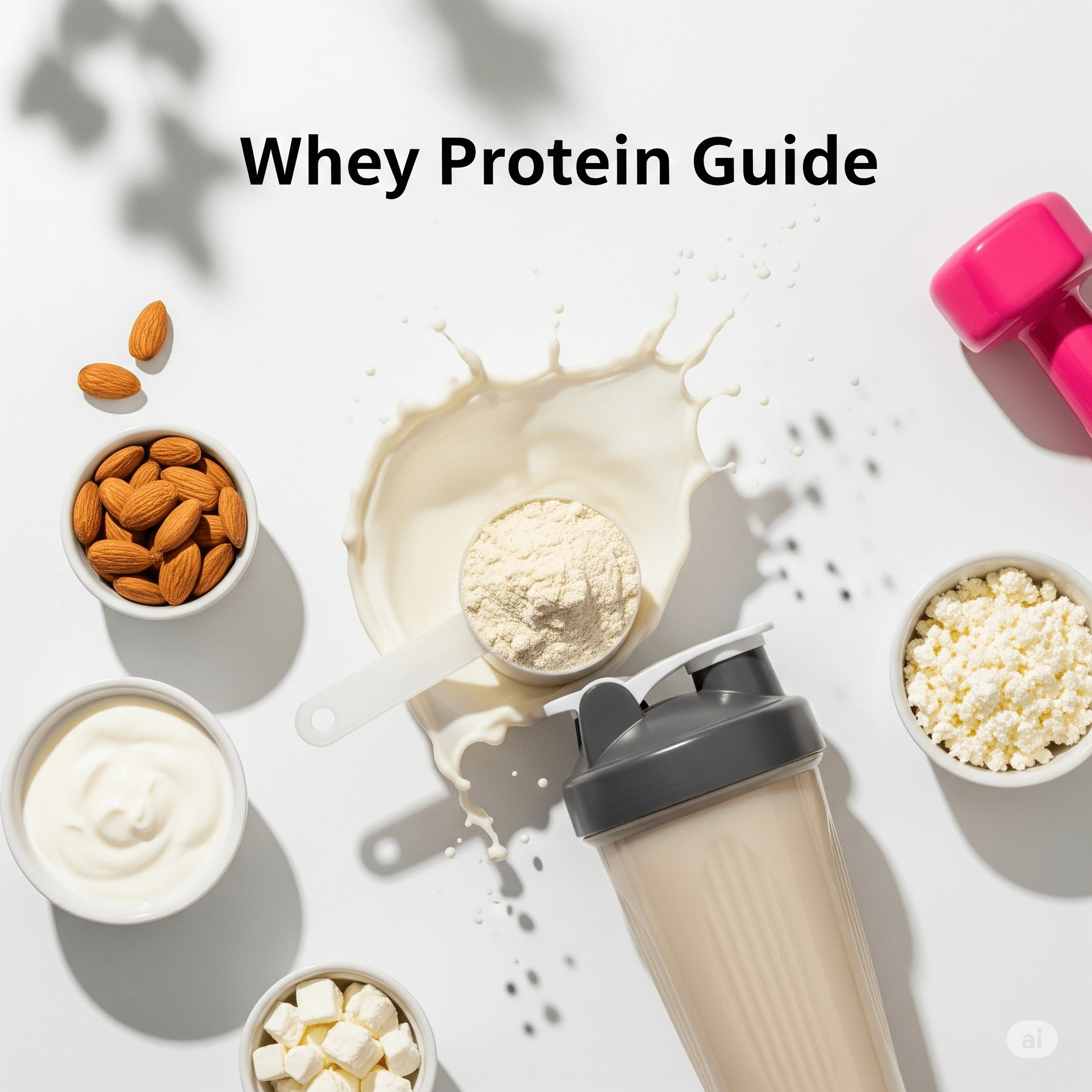
Whey protein is one of the most researched and popular supplements in the nutrition world — and for good reason. Whether you’re looking to build muscle, recover faster, or boost daily protein intake, whey protein offers a fast-digesting, complete source of amino acids that support your health goals.
This pillar guide will walk you through everything you need to know about whey protein, from comparisons with plant-based alternatives to detailed breakdowns of isolates, hydrolysates, and milk-based proteins.
👉 Need help calculating your daily protein goals? Use our free Protein Intake Calculator.
🔹 What Is Whey Protein and Why Is It Popular?
Whey is a complete protein derived from milk during the cheese-making process. It contains all nine essential amino acids and is rapidly absorbed, making it ideal for post-workout recovery or quick nutrition boosts.
According to Cleveland Clinic, whey protein supports:
- Muscle growth and repair
- Immune function
- Fat loss and lean mass maintenance
- Convenient supplementation in diets lacking protein
🔹 Subpages: Deep Dives into Whey Protein Topics
✅ Whey vs Plant Protein
Compare whey and plant-based protein sources. Learn which is better for digestion, allergies, fitness goals, and sustainability.
✅ Best Isolate Protein
Whey isolate is a purer form of protein with less lactose and fat. Discover the top-rated products and their use cases.
✅ Hemp Protein vs Whey Protein
Is hemp a worthy plant-based alternative? Compare nutrition profiles, amino acid content, and effectiveness for muscle growth.
✅ How to Incorporate More Protein
Not just shakes! Tips for adding protein to everyday meals, snacks, and even desserts.
✅ How to Remove Excess Protein from the Body
If you’re overdoing protein intake, this guide shows how to rebalance and support kidney health naturally.
✅ Whey Hydrolysate
This pre-digested form of whey offers ultra-fast absorption. Ideal for athletes or those with sensitive digestion.
✅ How Many Grams of Protein in a Cup of Milk
Understand the basics of milk-based protein and how it contributes to your daily intake.
✅ Milk Protein Isolate
Another form of dairy protein — compare it with whey in terms of cost, absorption, and use cases.
✅ Foods That Contain Essential Amino Acids
A helpful resource if you’re mixing food-based protein with supplements for complete coverage.
✅ Complete Protein
Whey is a complete protein, but what does that mean? Learn the science and examples from other complete sources.
✅ Plant Based Protein
Ideal for vegetarians or lactose-intolerant users. Discover how plant protein stacks up in the real world.
🔹 Types of Whey Protein
There are three major types of whey:
- Whey Concentrate – 70–80% protein, contains some fat and carbs
- Whey Isolate – 90%+ protein, filtered to remove more lactose and fat
- Whey Hydrolysate – Pre-digested for fast absorption and minimal bloating
Each type suits a different need — from weight loss to muscle gain to sensitive digestion.
🔹 Whey Protein in Whole Foods
Don’t forget that whey is also naturally found in dairy products. Foods like milk, Greek yogurt, and cottage cheese provide smaller amounts of whey along with other nutrients.
For example:
- 1 cup of milk = ~8g of protein
- 1 scoop of whey isolate = ~25g of protein
🔹 Who Should Use Whey Protein?
Whey is ideal for:
- Athletes and bodybuilders
- People on low-calorie or high-protein diets
- Women trying to preserve lean muscle
- Older adults trying to prevent muscle loss (sarcopenia)
- Anyone needing fast and convenient nutrition
💬 Final Thoughts
Whey protein remains a powerful, science-backed supplement that supports nearly any health and fitness goal. Whether you’re comparing it with plant proteins or choosing the right isolate, this guide — along with our subpages — gives you the full picture.
👉 Start tracking your protein needs today with our Protein Intake Calculator.
And explore more on our homepage: CalculatorProtein.com